Why Local Businesses Fail To Rank on Google Maps
For many local businesses, appearing on Google Maps feels unpredictable. Some businesses seem to dominate local search results effortlessly, while others struggle to appear even after creating a Google Business Profile and collecting reviews.
The reality is that Google Maps rankings have become significantly more competitive over the last few years. Simply having a business profile is no longer enough. Local search visibility now depends on a combination of trust signals, authority, relevance, website quality, user engagement, and overall business credibility.
Understanding why businesses fail to rank is the first step toward building sustainable local visibility.
Google Maps Visibility Is More Competitive Than Ever
Google Maps is one of the most valuable discovery platforms for local businesses. Whether someone is searching for a dentist, manufacturer, gym, clinic, consultant, or nearby service provider, Google increasingly prioritizes businesses that demonstrate strong local trust and relevance.
At the same time, competition has increased dramatically.
More businesses are investing in local SEO, optimizing their profiles, collecting reviews, and improving their websites. In many industries, dozens of businesses may compete for the same local search visibility within a small geographic area.
Google’s goal is simple:
show users the businesses most likely to provide a reliable and relevant experience.
That means ranking on Maps is no longer about shortcuts or quick tricks. It requires building a strong local visibility system.
Weak Google Business Profile Optimization
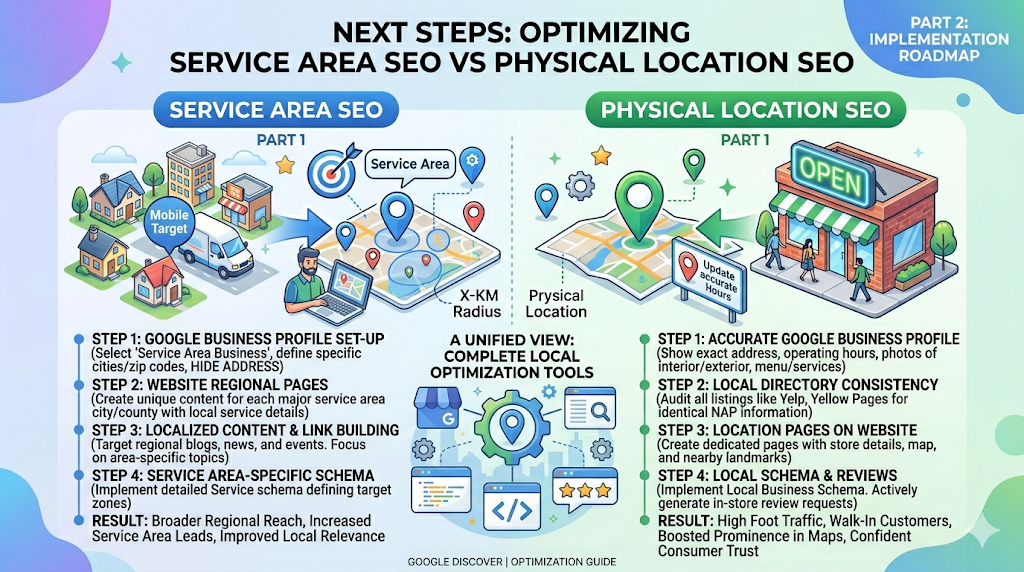
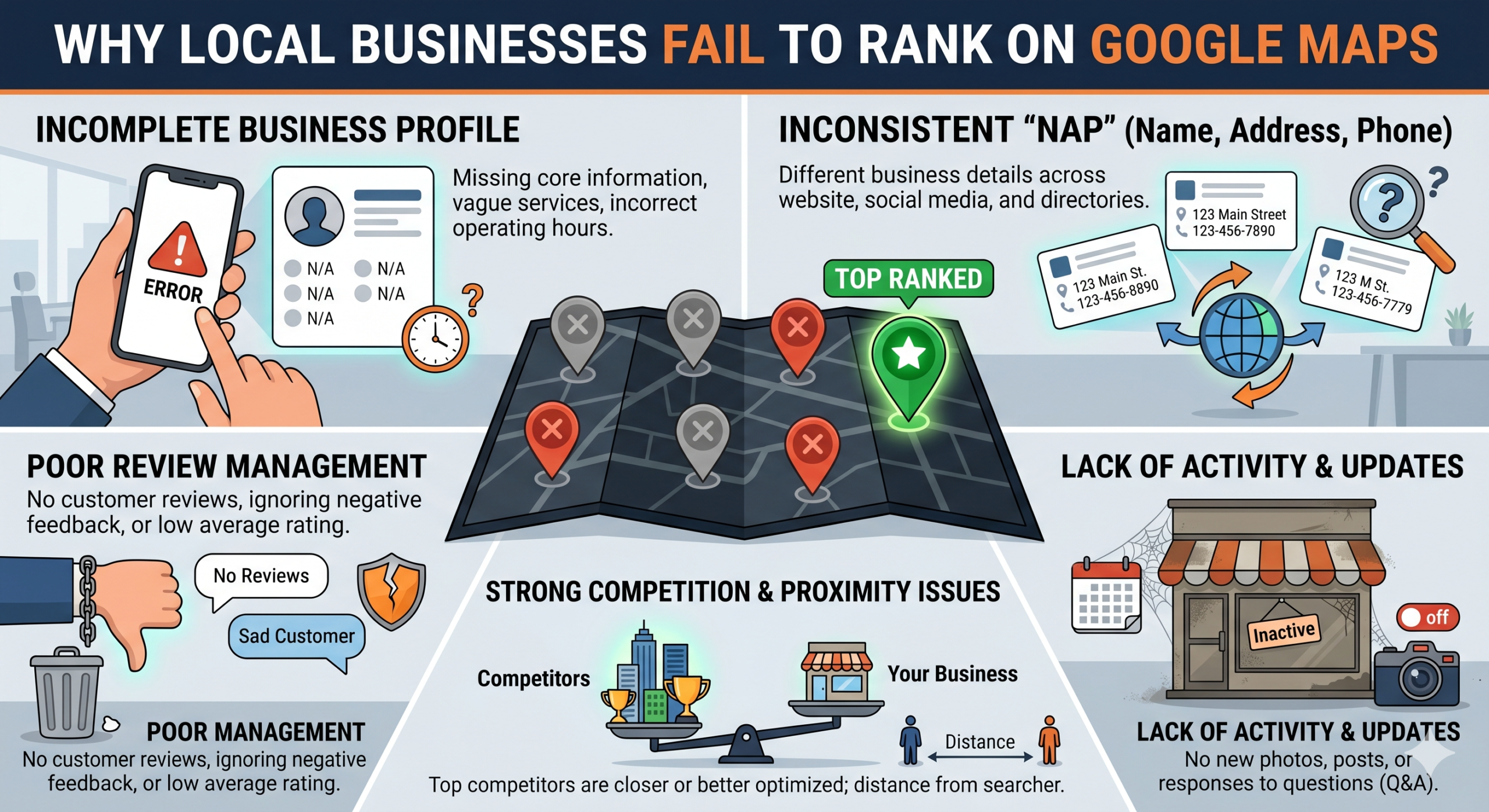
One of the most common reasons businesses fail to rank is incomplete or poorly optimized Google Business Profiles.
Many businesses create a profile, add basic information, and assume the work is done. In reality, Google evaluates a wide range of profile signals, including:
- Primary and secondary categories
- Business description
- Services
- Photos
- Posting activity
- Review quality
- Engagement signals
- Accuracy of information
An under-optimized profile sends weak relevance signals to Google.
Businesses that consistently update their profile, publish relevant information, and maintain accurate details often perform better in local search visibility over time.
Inconsistent Business Information Across The Web
Google relies heavily on consistency and trust.
If your business name, address, phone number, or website information differs across directories and platforms, it creates confusion.
For example:
- different phone numbers
- inconsistent addresses
- outdated listings
- duplicate business entries
These inconsistencies weaken trust signals and may reduce local ranking strength.
Strong local SEO requires accurate and consistent business information across the web.
Lack Of Local Authority Signals
Google Maps rankings are heavily influenced by authority.
Businesses that demonstrate strong local relevance and credibility are more likely to appear prominently in local search results.
Authority signals can include:
- quality backlinks
- local mentions
- relevant content
- citations
- strong user engagement
- branded searches
- website trust
Many local businesses struggle because they rely entirely on their Google Business Profile while ignoring broader authority-building efforts.
A profile alone rarely creates long-term competitive visibility.
Thin Or Generic Website Content
Your website still plays a major role in local rankings.
Many businesses use:
- thin service pages
- copied content
- generic city pages
- outdated websites
This creates weak relevance signals.
Google wants to understand:
- what your business does
- where you operate
- who you serve
- why your business is trustworthy
A strong local website helps reinforce your Maps presence and supports broader search visibility.
Businesses with locally relevant, high-quality content often build stronger authority over time.
Weak Review Signals
Reviews are important, but many businesses misunderstand how reviews impact rankings.
It is not simply about having the highest number of reviews.
Google also evaluates:
- review quality
- recency
- consistency
- keywords within reviews
- engagement
- overall trust signals
Businesses with outdated or low-quality reviews may struggle despite having many ratings.
Consistent review generation and customer trust play an important role in long-term local visibility.
Poor Mobile Experience & Website Performance
Most local searches happen on mobile devices.
If a website:
- loads slowly
- feels outdated
- creates friction
- performs poorly on mobile
users often leave quickly.
Google pays attention to user experience signals.
A poor mobile experience can indirectly weaken visibility and reduce conversions, even if rankings improve temporarily.
Modern local SEO is closely connected to usability, trust, and overall digital experience.
Competing In Saturated Markets Without A Strategy
Some industries are highly competitive locally.
Businesses often assume they can rank simply because they operate in a city or have been established for years.
But in competitive markets, visibility requires:
- strategic optimization
- authority building
- strong local relevance
- content systems
- review management
- consistent SEO execution
Without a structured approach, businesses often remain invisible while competitors continue strengthening their presence.
Rankings Alone Are Not Enough
Many businesses focus only on rankings.
But visibility today is broader than traditional SEO metrics.
Strong local growth often comes from a combination of:
- Google Maps visibility
- website authority
- trust signals
- content relevance
- customer reviews
- conversion-focused pages
- branded search presence
A business can rank for keywords and still struggle to generate meaningful enquiries if trust and conversion signals are weak.
That is why modern local SEO should focus on building a complete visibility ecosystem rather than chasing rankings alone.
What Businesses Should Focus On Instead
Instead of looking for shortcuts, businesses should focus on long-term visibility systems.
This includes:
- properly optimized Google Business Profiles
- strong local relevance
- authority-focused content
- consistent review generation
- technical website quality
- conversion-focused pages
- trustworthy branding
- ongoing optimization
Local SEO is not a one-time task.
Search visibility compounds gradually when businesses build trust and authority consistently over time.
The Future Of Local Search
Local search is evolving rapidly.
Google is increasingly moving toward:
- AI-driven search experiences
- conversational discovery
- entity-based understanding
- personalized local recommendations
Businesses that rely only on outdated SEO tactics may struggle to remain visible as search behavior changes.
Future-ready local SEO requires businesses to think beyond simple keyword rankings and focus on broader visibility, authority, and trust.
The businesses that adapt early will likely build stronger long-term advantages.
Final Thoughts
Ranking on Google Maps has become more competitive because Google prioritizes businesses that demonstrate trust, relevance, authority, and strong user experiences.
Local visibility today requires more than simply creating a business profile or adding keywords to a website.
Businesses that invest in strategic visibility systems, authority building, and long-term optimization are far more likely to build sustainable local growth over time.
Want Better Local Visibility?
RankScalers helps businesses improve Google Maps visibility, local authority, and long-term organic discovery through strategic SEO systems.
Request a Visibility Audit to identify what may be limiting your local search performance.
Call us: +91 70425 49740 Or, E-Mail: rankscalers@admin